Certification Processes and Their Effect on Slot Selection Criteria in Aggregated Review Platforms
Finley Braun · Jul 9, 2026
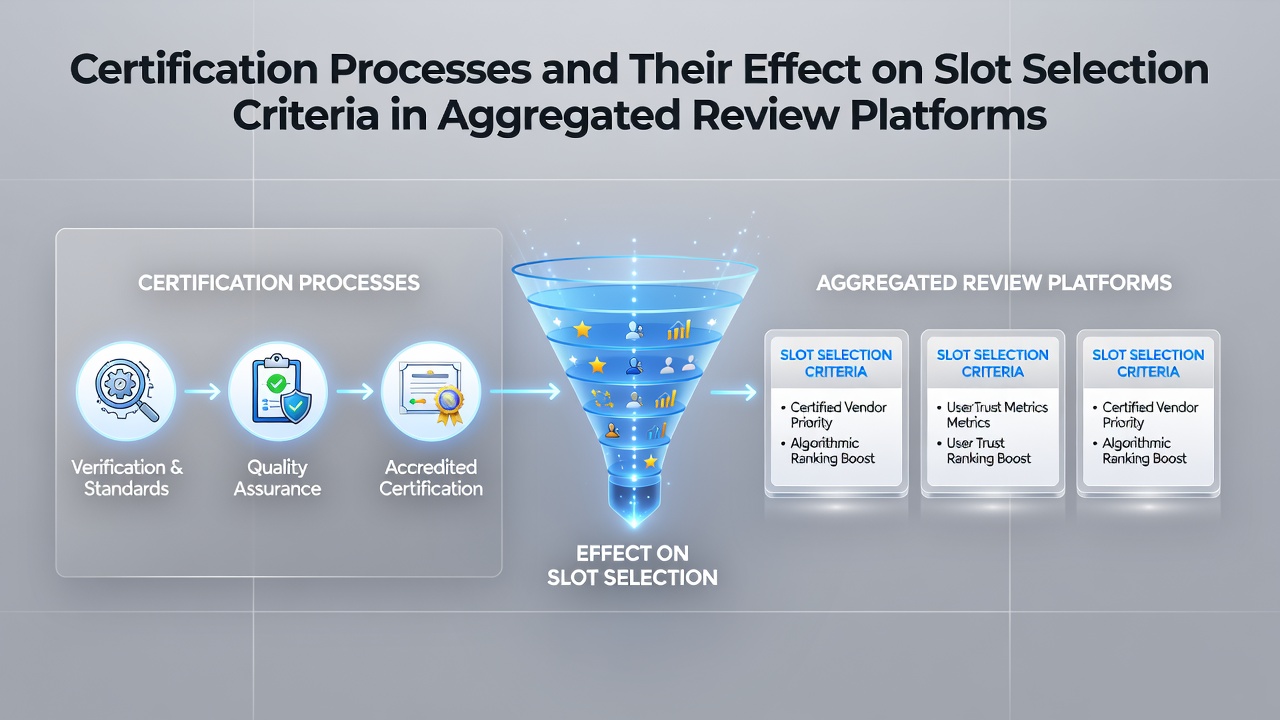
Certification Processes and Their Effect on Slot Selection Criteria in Aggregated Review Platforms
Aggregated review platforms compile data from multiple sources to rank and recommend slot games, and certification processes play a central role in determining which titles meet inclusion standards. These platforms evaluate slots based on verification reports from independent testing laboratories, which examine random number generator integrity, payout percentages, and compliance with regulatory frameworks across different jurisdictions. Data from these certifications directly shapes selection algorithms that prioritize games with documented fairness metrics over those lacking third-party validation. Certification bodies such as Gaming Laboratories International and iTech Labs conduct standardized tests that generate reports on volatility patterns, hit frequencies, and return-to-player calculations. Aggregated platforms incorporate these reports into their criteria, often requiring minimum thresholds for inclusion in featured lists or search results. In July 2026, regulatory updates from the New Jersey Division of Gaming Enforcement emphasized expanded documentation requirements for digital slot deployments, prompting platforms to adjust their filtering mechanisms accordingly.Core Components of Slot Certification
Testing protocols begin with RNG evaluation, where sequences undergo statistical analysis to confirm unpredictability and uniform distribution across outcomes. Laboratories also verify that mathematical models align with advertised payout structures through millions of simulated spins, producing datasets that review platforms reference when scoring reliability. Observers note that platforms integrate these datasets to filter out titles with incomplete or outdated reports, creating a baseline that influences visibility rankings.
Additional checks cover software security measures, including encryption standards for data transmission and protection against unauthorized modifications. Certification extends to jackpot mechanisms and bonus feature triggers, ensuring they operate within declared parameters. Research from the University of Nevada, Reno gaming studies program indicates that slots passing these multi-stage verifications receive higher placement weights on aggregated sites because the underlying data supports consistent user experience metrics.Influence on Platform Selection Algorithms
Review platforms construct selection criteria around certification status as a primary filter, assigning weighted scores that combine lab results with user-generated feedback and regulatory compliance records. Slots holding current certifications from recognized authorities gain priority in search functions and recommendation engines, while uncertified alternatives face reduced exposure or outright exclusion. This approach stems from platform policies that reference reports issued by entities like the Australian Communications and Media Authority for cross-border compliance checks.
Algorithms further analyze certification renewal dates and any noted discrepancies flagged during audits, adjusting rankings in real time when new reports become available. Those managing aggregated systems have observed that titles with multiple jurisdictional approvals tend to appear more frequently in curated collections, reflecting the cumulative weight of verified data points. In practice, this creates a selection environment where certification documentation serves as both an entry requirement and a ranking factor.
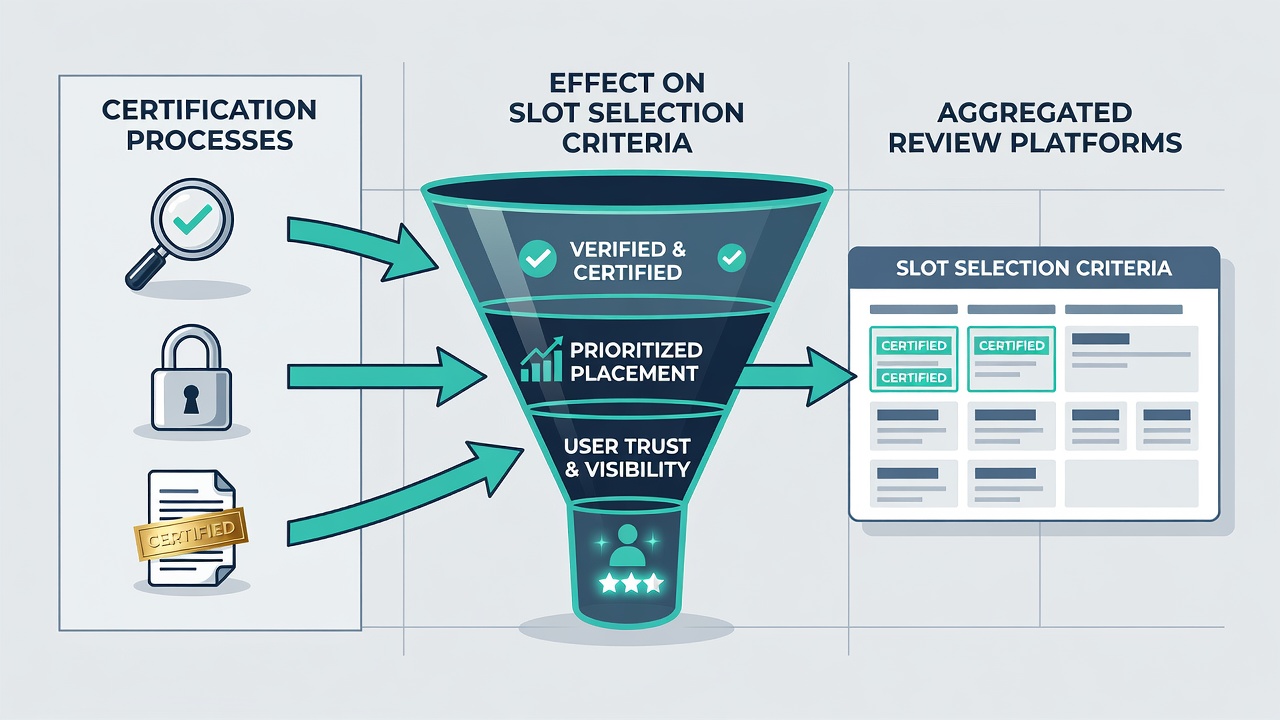
Regional Variations in Certification Impact
Different markets apply distinct certification standards that aggregated platforms must reconcile when serving international audiences. European frameworks often emphasize consumer protection disclosures alongside technical testing, whereas North American regulators focus more heavily on revenue reporting accuracy and anti-money laundering integrations. Platforms aggregate these varied requirements into unified criteria, cross-referencing reports from multiple sources to determine eligibility for users in specific regions.
Canadian provincial authorities, for instance, maintain separate evaluation processes that platforms monitor through industry association publications. This results in selection lists that reflect the strictest applicable standards across overlapping jurisdictions, ensuring broader compatibility. Data compiled by the Canadian Gaming Association shows that slots with synchronized certifications across borders maintain steadier positions in aggregated rankings compared to those holding single-market approvals only.
Documentation Requirements and Platform Updates
Aggregated platforms require ongoing submission of certification renewals, typically on annual or biennial cycles depending on the issuing laboratory. When providers submit updated reports, systems recalibrate slot positions based on any changes in tested parameters such as volatility indices or feature frequency. This continuous verification cycle prevents stale data from influencing user recommendations and maintains alignment with evolving regulatory expectations.
Platform operators track certification expirations through automated alerts tied to laboratory databases, prompting providers to supply fresh documentation before rankings drop. Those analyzing platform trends have noted that games maintaining uninterrupted certification chains demonstrate more stable selection patterns over extended periods, as the accumulated verification history reinforces their credibility scores within the aggregation model.
Conclusion
Certification processes establish measurable benchmarks that directly determine slot visibility and ranking on aggregated review platforms through integrated data from independent laboratories and regulatory bodies. These benchmarks encompass RNG validation, payout verification, and security assessments that platforms convert into algorithmic filters and weighted scores. Regional regulatory differences add layers of complexity, requiring platforms to synthesize reports from varied sources into consistent selection standards. As certification documentation continues to evolve with new jurisdictional requirements, aggregated systems adjust their criteria to reflect the most current verified information available.